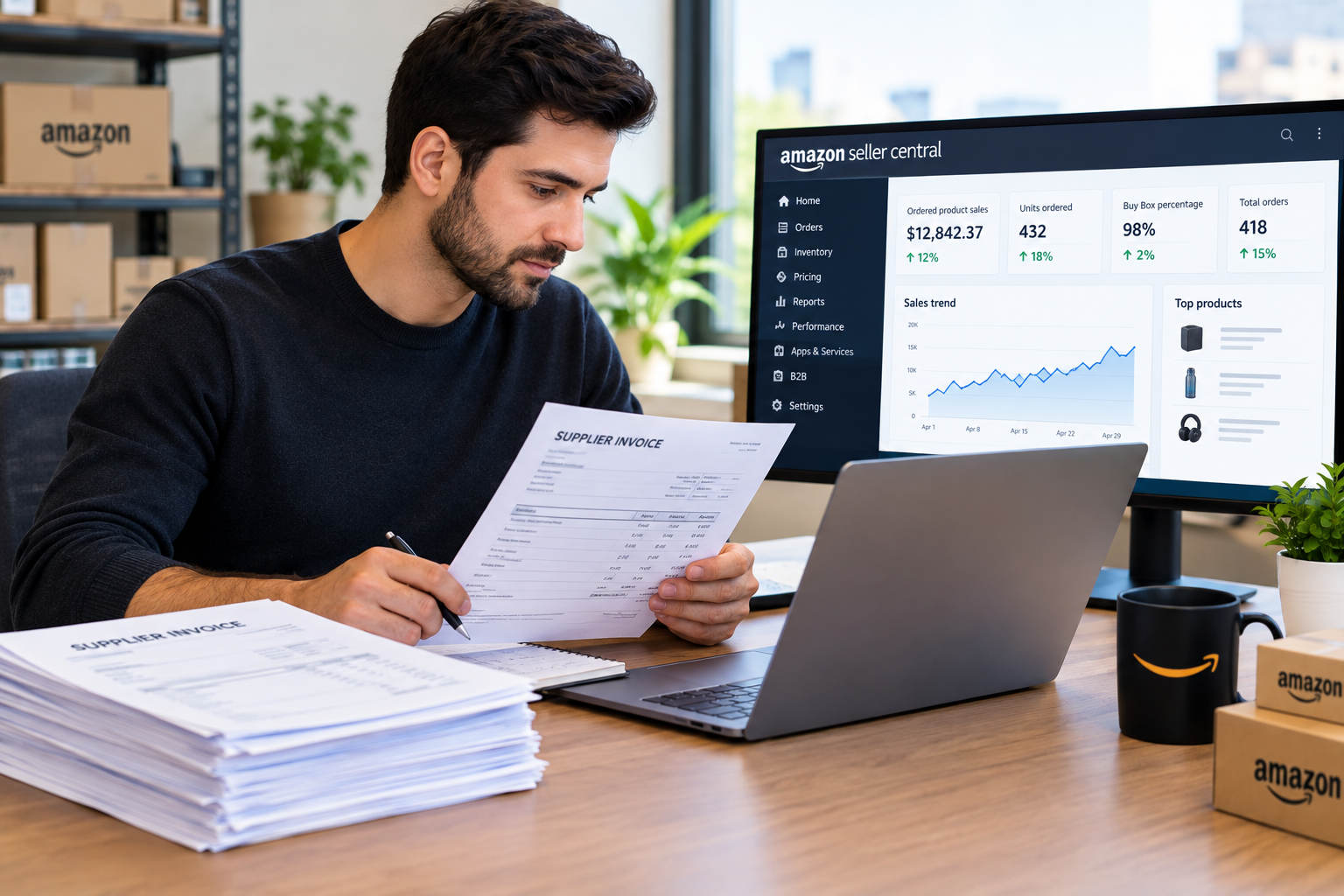
Amazon wholesale is one of the most accessible ways to start selling on Amazon in the US. You buy branded products from distributors at a discount and resell them through your own seller account. You don't need to create or manufacture a product, but you do need the right suppliers, the right approvals, and a clear view of your margins.
This guide covers how the model works, how to find Amazon wholesale suppliers, how to get ungated on restricted brands, and how to tell whether the model is profitable. If you're weighing it against building your own brand, we compare Amazon wholesale vs private label further down.
1. How Amazon wholesale works
In a wholesale model, you purchase inventory directly from a brand or an authorised distributor and list it on Amazon. You're reselling products that already exist, so you compete on price, availability, and service rather than on product development.
Most US sellers use Fulfilment by Amazon (FBA). You send inventory to Amazon's warehouses, and Amazon handles storage, picking, packing, and customer service. This is what most people mean when they search for Amazon FBA wholesale.
- ✓Account type: confirm you have a Professional seller account, which is required for most wholesale categories.
- ✓Brands and categories: list the brands you're interested in and check which are open to you and which are gated.
- ✓Fulfilment method: decide whether FBA suits your products, storage needs, and cash flow.
2. Is Amazon wholesale profitable?
It can be, but profit depends on your buy cost, Amazon's fees, and how competitive the listing is. The margin that matters is what's left after every cost — not the gap between your buy price and the listing price.
Work through these four numbers before buying stock
- Buy cost: what you pay the supplier per unit, including shipping to your prep location
- Referral fee: a percentage of the sale price, which varies by category
- FBA fulfillment fee: based on the size and weight of the item
- Storage and returns: monthly storage costs and the return rate for the product
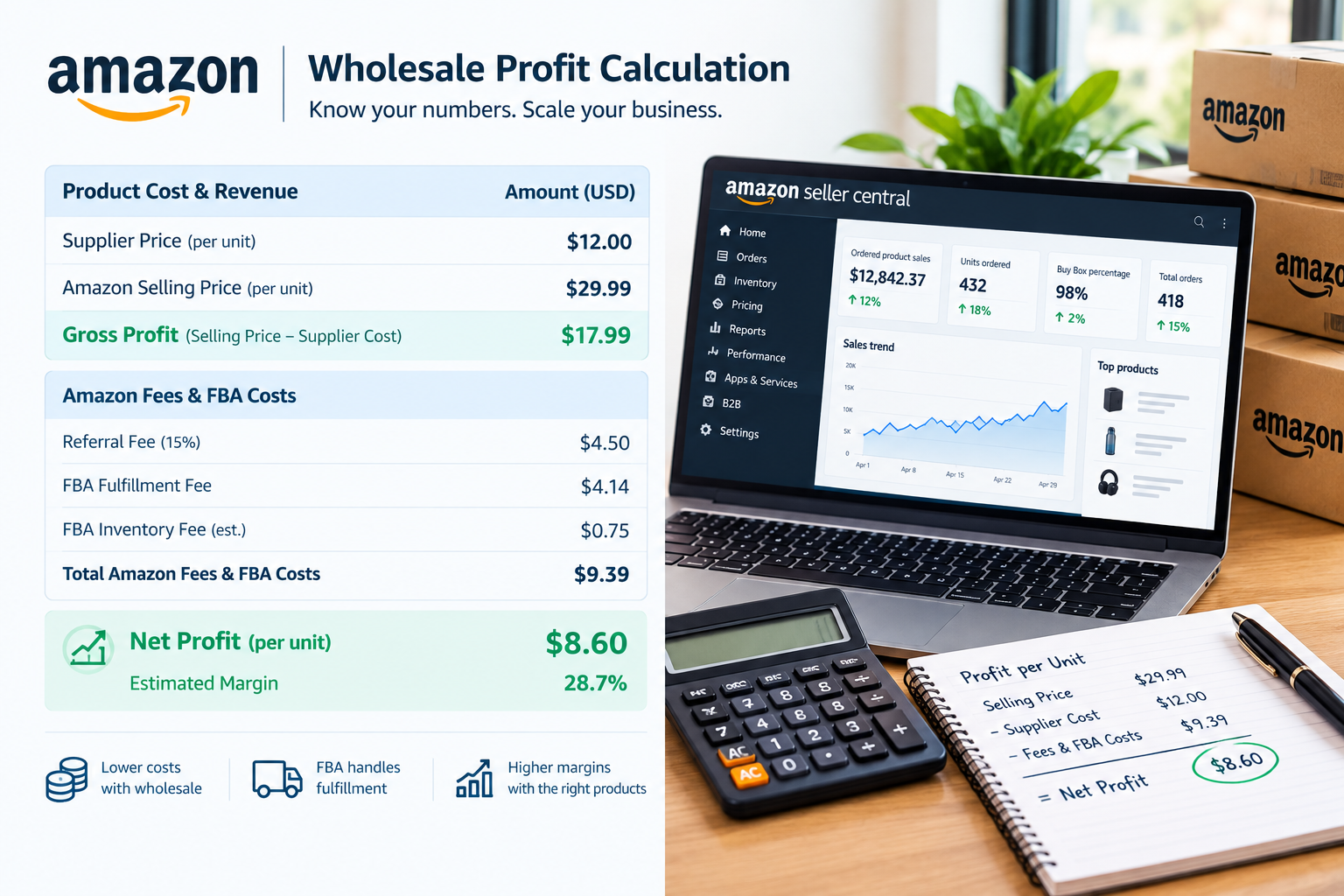
⚠️ Use Amazon's Seller Central fee calculator for current figures — referral fees and FBA fees change regularly. Be cautious about any tool or course that promises a fixed profit percentage. Real margins vary widely by product and category.
3. How to find Amazon wholesale suppliers
A reliable supplier matters more than almost anything else. A poor supplier can cost you your account, not just your margin.
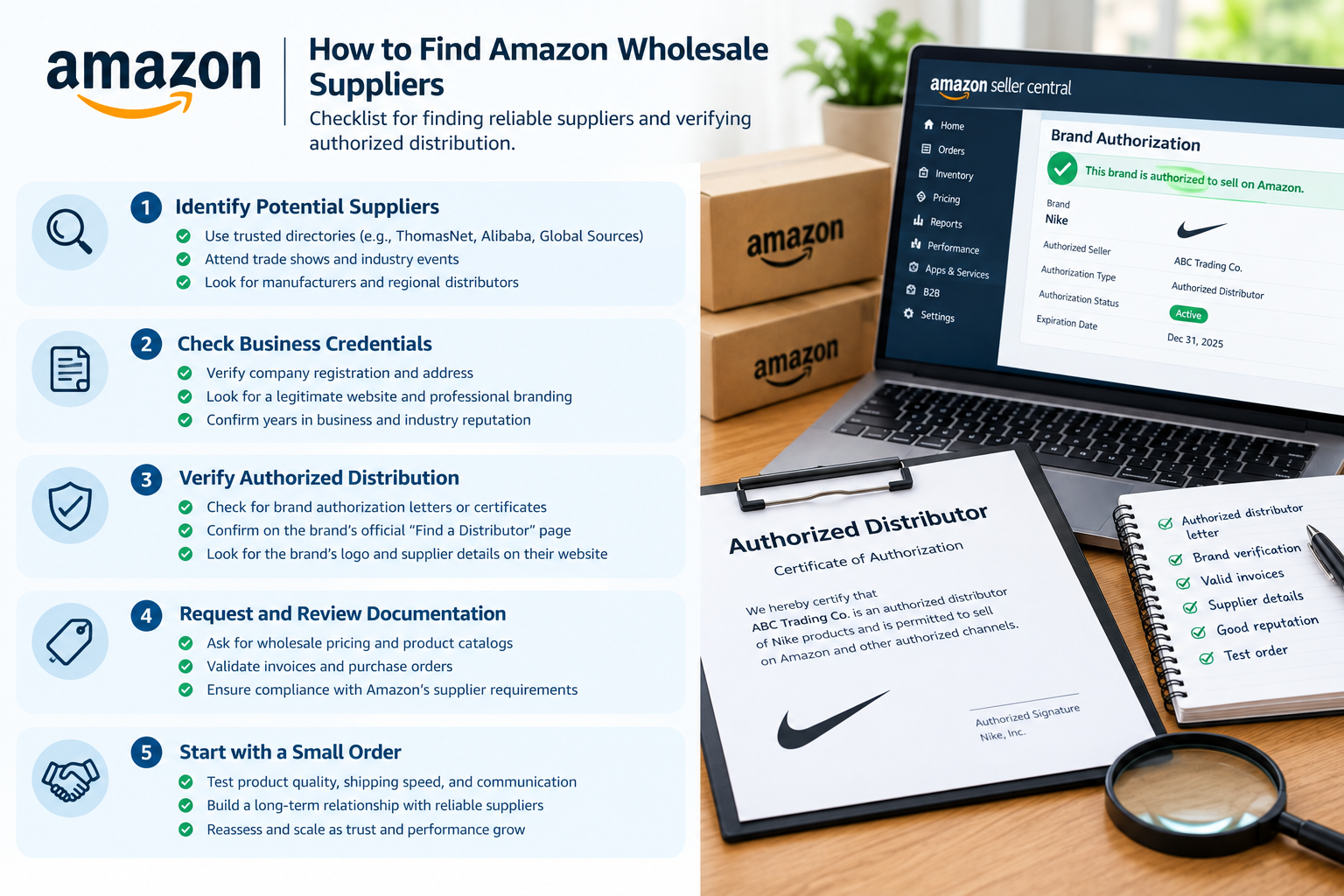
Signs of a reliable supplier
- Authorised distribution: they hold a written authorisation from the brand, not just stock bought elsewhere.
- Transparent invoices: they can show where the product was purchased.
- Consistent stock: they can supply the same product at the same quality across several orders.
- Clear terms: minimum order quantities, payment terms, and returns policies are in writing.
- ✗ Suppliers offering unusually low prices on popular brands
- ✗ Suppliers who won't provide invoices or brand authorisation
- ✗ Requests for payment through unusual channels
Counterfeit, grey-market, or stolen goods can lead to listing suppression or permanent account suspension.
4. How to get ungated on Amazon
Many brands are gated, meaning Amazon only lets approved sellers list them. This is where most new sellers get stuck.
The ungating process
- Apply for approval through Seller Central for the brand or category.
- Provide invoices from an authorised supplier or the brand itself.
- Show that the products are genuine and that you can supply them consistently.

- ✓ Check current listing rules in Seller Central before applying
- ✓ Have invoices ready from an authorised supplier — no placeholders
- ✓ If refused, do not resubmit the same invoices — find out why first
- ✓ Focus on brands and categories that are open to new sellers while you build your history
Requirements vary by brand and category, so check the current listing rules in Seller Central before you apply. Approval isn't guaranteed — if you're refused, find out why, and focus on brands and categories that are open to new sellers.
5. Amazon wholesale vs private label
These two models are often compared, and the right choice depends on your situation.
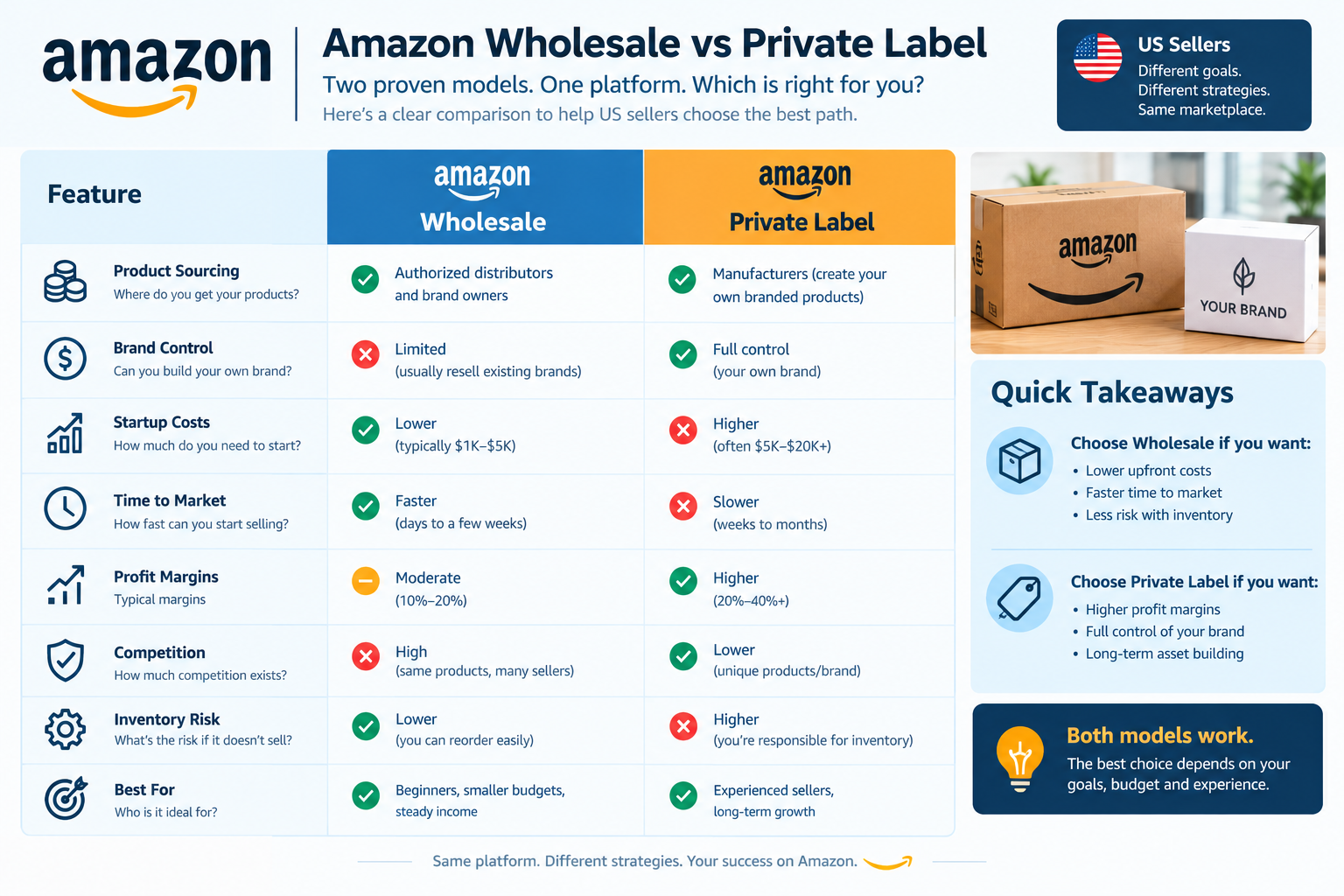
| Factor | Amazon Wholesale | Private Label |
|---|---|---|
| Upfront effort | Lower: supplier sourcing and approvals | Higher: product development, branding, sourcing |
| Competition | Often high on popular brands | Lower if the niche is chosen carefully |
| Brand control | None: you sell someone else's brand | Full: you own the brand |
| Main risk | Account risk from ungating or supplier issues | Product and inventory risk |
| Time to first sale | Usually faster | Usually slower |
Wholesale is often a faster way to start. Private label gives you more long-term control over margins and listings. Many sellers begin with wholesale to build cash flow and experience, then move into private label. If that's your route, see our Amazon FBA services.
6. Common mistakes to avoid
Check these before you scale your wholesale operation:
- ✗Buying from unverified suppliers to save a few percent on cost — the account risk isn't worth it.
- ✗Ignoring fees and focusing only on the sale price — your net margin is what matters.
- ✗Choosing heavily restricted brands without checking ungating requirements first.
- ✗Overstocking before you've tested demand and the return rate for a product.
- ✗Not monitoring listings for suppression, pricing changes, or Buy Box losses.
Book a free audit and we'll look at your current setup and tell you what's worth pursuing.
You can also explore our Amazon FBA services.